
Commercial boilers are essential for many businesses, providing heat and hot water to ensure operations run smoothly and efficiently.
For heating large office spaces, industrial warehouses, or specific manufacturing plant processes, the right boiler system can significantly impact a company’s productivity and operational costs.
This guide aims to demystify commercial boilers for business owners, facilities managers, and decision-makers, offering insights into the types, applications, and considerations for selecting, installing, and maintaining these critical systems to support business needs.
What Is A Commercial Boiler?
A commercial boiler is a sophisticated heating solution designed to meet the high hot water and heating demand in large buildings such as office complexes, schools, hospitals, and industrial facilities.
Unlike domestic boilers, which cater to the needs of individual households, commercial boilers are engineered for extensive use, offering greater capacity and efficiency to handle the substantial requirements of commercial spaces.
These boilers are integral to maintaining a comfortable and productive environment, and their robust construction ensures they can withstand the rigours of constant operation.
Moreover, commercial boilers often come with advanced features and control systems, allowing for precise heating management and contributing to energy conservation efforts within commercial settings.
What Is the Difference Between A Domestic And Commercial Boiler?
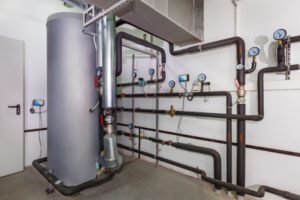
The primary difference between domestic and commercial boilers is their capacity, design, and application. Domestic boilers are typically smaller, catering to single households’ heating and hot water requirements, and designed for simplicity and ease of use.
In contrast, commercial boilers are engineered to deliver higher outputs and cater to the demands of larger spaces such as businesses, schools, and industrial premises, where the heating and hot water needs significantly surpass those of a typical household.
These commercial systems often feature more complex configurations, including multiple boilers in a cascaded system for efficiency and redundancy.
They come equipped with advanced control systems to manage their operation effectively across different zones and usage patterns, highlighting their adaptability to various commercial applications.
At What Point Does A Boiler Become Commercial?
A boiler transitions from domestic to commercial based on several critical factors, including its heating capacity, physical size, and the environment it is intended to serve. Domestic boilers are typically designed to meet the needs of single-family homes, providing adequate heating and hot water for a relatively small space.
In contrast, commercial boilers are engineered for larger spaces such as office buildings, schools, and industrial facilities, where the demand for heating and hot water is significantly higher. The exact point at which a boiler is considered commercial can vary, but it often involves its ability to exceed a certain output threshold, usually measured in kilowatts (kW).
Additionally, commercial boilers may feature more complex control systems and require specialised boiler installation and maintenance practices to accommodate their larger size and higher output.
How Long Does It Take To Install A Commercial Boiler?
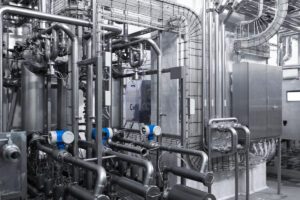
The installation timeframe for a commercial boiler can vary significantly based on several factors, including the system’s complexity, the boiler’s size, and the specifics of the site where it is being installed.
Typically, the process could take a few days to several weeks. Preliminary work might involve site assessments, obtaining necessary permits, and preparing the installation area, which can add to the overall timeline.
The installation involves setting up the boiler, connecting it to existing heating systems, and meeting all safety and operational protocols. For more extensive facilities or complex systems, additional time may be required for testing and commissioning to ensure the boiler operates efficiently and safely within the intended environment.
Businesses must plan for this installation period to minimise disruption to their operations.
What Are The Different Types Of Boilers?
The search yielded only some specific information on the different types of boilers. However, generally, boilers can be categorised into several types based on their functionality, fuel source, and application.
The main types include combi boilers, which provide both heating and hot water directly from the mains without the need for a storage tank; system boilers, which require a cylinder for storing hot water but no tank for heating water, making them more efficient than conventional boilers; and conventional boilers, which utilise a storage tank and are typically used in older homes where the existing system and radiators are suited to this type of boiler.
Additionally, condensing boilers are designed to capture heat from exhaust gases that would otherwise be lost, making them more energy-efficient. Each type has unique advantages and is suited to different residential or commercial settings based on the specific heating and hot water requirements.
Downtime And Impact Considerations
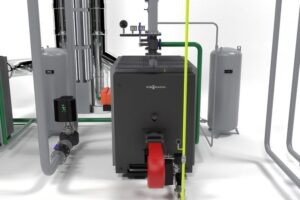
It’s crucial to understand that installing or replacing a commercial boiler can lead to significant downtime, affecting a business’s operations.
The extent of this impact largely depends on the installation’s complexity, the boiler’s size, and the site’s preparedness. Businesses must plan meticulously to mitigate these effects, scheduling work during off-peak hours or arranging temporary heating solutions to maintain continuity.
The downtime affects the immediate environment and can have financial repercussions, especially for operations reliant on constant heating solutions. Therefore, thorough planning and consultation with professionals are essential to minimise the impact on business operations during boiler installation or maintenance.
Factors That Impact Delivery On Boiler Installations On Commercial Premises
The delivery of boiler installations in commercial premises is influenced by various factors that can affect the timeline and efficiency of the process. Key considerations include the complexity of the installation, which can vary based on the boiler type and the existing infrastructure of the building.
The boiler’s size and the commercial space’s specific requirements, such as heating and hot water demand, also play a crucial role. Regulatory compliance and obtaining the necessary permits can introduce delays, requiring careful planning and coordination.
Access to the installation site and logistical challenges, such as the delivery of equipment and materials, can further impact the timeline. Additionally, the skill and experience of the installation team are vital to a smooth and efficient installation process.
Businesses must account for these factors to ensure minimal disruption and optimal integration of the new boiler system.
What Happens When You Need A Replacement Boiler?
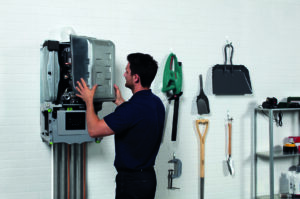
When the need arises for a replacement commercial boiler, it initiates a critical process that requires thorough planning and consideration to ensure minimal disruption to business operations.
This involves assessing the current heating needs, evaluating the efficiency and capacity of potential new boilers, and considering the logistical aspects of removing the old unit and installing the new one. Regulatory compliance and adherence to safety standards are paramount, as is selecting a reliable supplier and installation service and a provider that can offer boiler servicing to keep your new boiler working at all times. The transition period can impact business operations, so scheduling the replacement at a time that minimises this impact, possibly during off-peak hours or business closures, is essential.
Additionally, the financial implications, including the investment in the new boiler and potential energy savings, must be carefully evaluated to ensure the replacement aligns with the business’s long-term operational goals and sustainability practices.
How Much Will A Commercial Boiler Cost?
The cost of a commercial boiler can vary widely, depending on several factors, such as the boiler’s size, type, capacity, and the specific requirements of the commercial premises it’s intended to serve. Additionally, the complexity of the installation process, including the need for any additional infrastructure changes or upgrades, can significantly influence the overall cost.
The investment can be substantial for larger commercial settings requiring high-capacity boilers to meet extensive heating and hot water demands, often running into tens of thousands of pounds. It’s also important to consider ongoing operational and maintenance costs, which can impact the total cost of ownership.
Given these variables, obtaining a detailed and tailored quote from a professional provider is essential to understand the financial implications fully.
Should You Always Work With Commercial Gas Engineers?
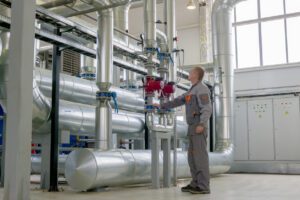
Working with commercial gas engineers for boiler installations and maintenance in commercial premises is highly advisable and often a regulatory requirement. These professionals possess the specialised knowledge, skills, and certifications to ensure the installation complies with strict safety standards and building regulations.
Commercial gas engineers are adept at handling the complexities of large-scale heating systems, including advanced control systems, higher capacities, and integration with existing infrastructure.
Their expertise guarantees the safety and efficiency of the boiler operation and helps optimise the system for energy efficiency, potentially leading to significant cost savings over time.
Moreover, their familiarity with the latest technologies and regulations can provide valuable guidance in selecting the most suitable boiler system for a specific commercial application, ensuring reliability and performance that matches the business’s needs.
Book Your Initial Consultation With Our Team At J&S Heating Today!
Booking your initial consultation with the team at J&S Heating is the first step towards ensuring your commercial premises are equipped with the most efficient and reliable heating solutions tailored to your specific needs.
Our experienced and certified commercial gas engineers are ready to provide expert advice on boiler selection, installation, and maintenance, ensuring compliance with all safety standards and regulations.
During the consultation, we will assess your premises, discuss your heating requirements, and answer any questions you may have. We’re committed to offering bespoke solutions that meet your immediate needs and consider long-term efficiency and cost-effectiveness.
Contact us today to schedule your consultation and take the first step towards optimal heating for your business.