
Effective commercial boiler water treatment is essential for maintaining safe, efficient, and long-lasting heating systems. By protecting against scale, corrosion, and microbiological growth, a proper regime not only preserves the integrity of your investment but directly impacts energy usage and maintenance costs.
This guide covers how commercial boiler water treatment works, what UK standards require, troubleshooting common issues, and selecting the right strategy for your organisation.
The Importance of Water Treatment in Commercial Boiler Systems
At the heart of any commercial heating system, water acts as the primary heat transfer medium. Untreated or improperly managed water can cause scale, corrosion, microbiological fouling, and even dangerous system failures.
In practical terms, limescale reduces efficiency and increases fuel bills, corrosion threatens boiler safety and lifespan, and microbial contamination disrupts performance while accelerating maintenance needs.
A dedicated water treatment programme safeguards these systems, keeping your business compliant and your costs controlled.
How Water Treatment Protects Boilers: Key Mechanisms
Chemical and physical water treatment methods directly address the root causes of poor system health: dissolved minerals, oxygen, contaminants, and microbes.
Scale, primarily caused by calcium and magnesium salts, forms a rock-hard layer on internal boiler surfaces. Even a thin scale build-up insulates heat exchange, requiring more fuel and raising the risk of localised overheating and bursting. Water softening, by exchanging calcium and magnesium ions for sodium, is a reliable route to stop this process.
Corrosion is amplified by oxygen and carbon dioxide dissolved in the feedwater. Oxygen scavengers, such as sodium sulphite, react chemically to bind with free oxygen and prevent it attacking metal surfaces. Alkalinity builders and phosphate treatments maintain a protective environment, further reducing the risk.
Microbiological contamination, such as algae or bacteria, can break down passivating layers and accelerate both corrosion and scaling. Biocides target these organisms before they become a problem.
Mechanical separation, such as filtration, targets debris and suspended solids that can settle and form sludge. Blowdown processes periodically remove water with accumulated impurities, helping keep levels safe.
What Happens Without Proper Boiler Water Treatment?
Consequences of neglect quickly become expensive and unsafe. Just 1 mm of scale can increase fuel usage by 5 to 10 percent. Corrosion can eat through tubes and pressure vessels, leading to leaks, expensive repairs, and even catastrophic failure. Poor water control can cause carryover, pushing water into the steam line and damaging downstream equipment.
Symptoms include loss of heating performance, fluctuating pressure, visible leaks, unexplained rises in energy bills, and increased breakdown frequency.
Routine treatment is proactive damage prevention, not just a maintenance box to tick.
Regulatory Drivers and British Standards for Boiler Water Treatment
The UK mandates strict controls for commercial boiler operation. Under the Pressure Systems Safety Regulations (PSSR) 2000, owners have a legal responsibility to ensure plant safety, including water quality management.
British Standards such as BS 2486, which gives recommendations for treatment of water for steam boilers and water heaters, set clear parameters for acceptable water chemistry, including maximum allowable levels for hardness, alkalinity, total dissolved solids, and dissolved oxygen, with related dosing guidance, monitoring frequency, and record keeping.
Neglecting these standards can invalidate insurance, lead to enforcement actions, and risk prosecution should incidents occur.
Choosing the Most Effective Water Treatment Programme
Treatment should always be tailored to your boiler’s design, operating conditions, and business sector. Your water source, boiler type and load cycle all influence system choice and control strategy.
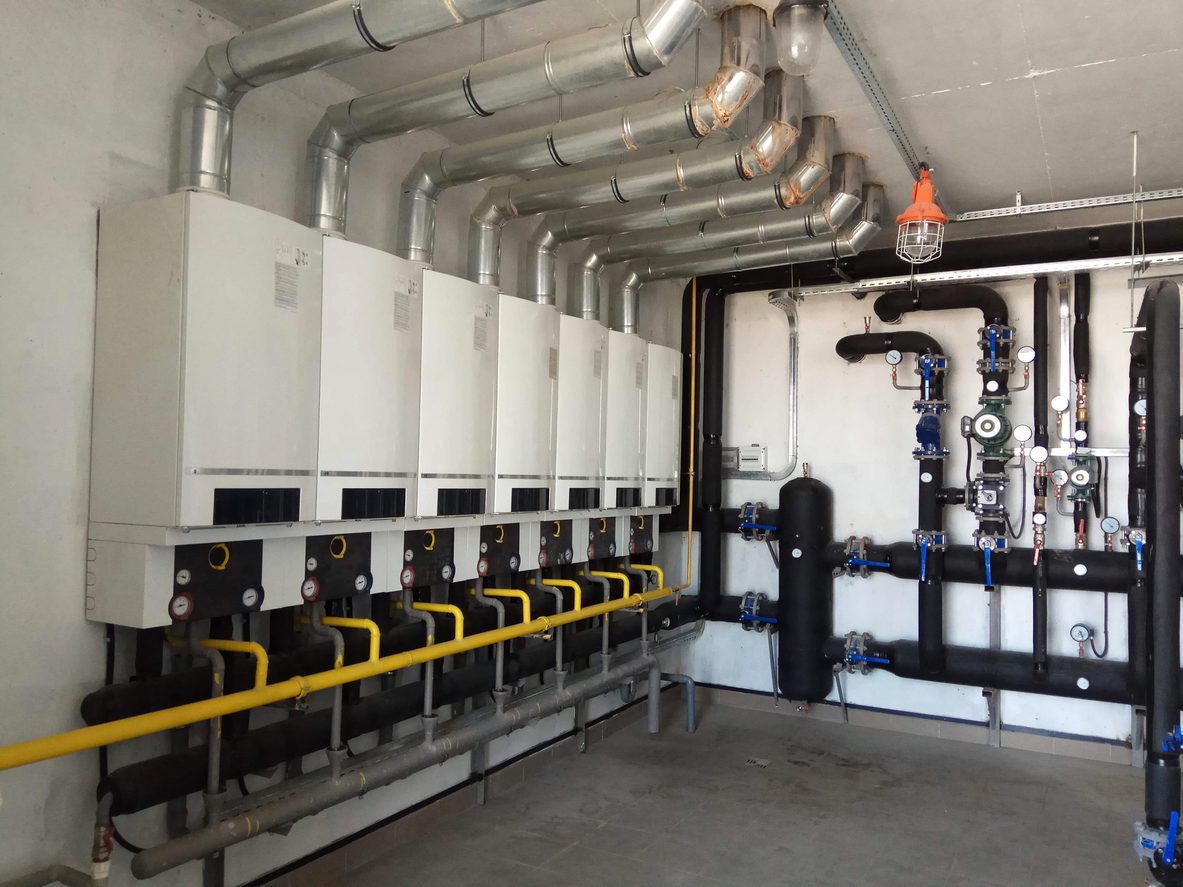
The most common combination involves pre-treatment such as softening and filtration, chemical dosing for oxygen scavenging and phosphate control, and regular blowdown with scheduled testing. If you are planning plant upgrades or a new system, our commercial boiler installation in London page explains design choices that affect ongoing water treatment.
Monitoring, Testing and Record Keeping: Non-Negotiables
Ongoing validation is just as critical as initial system choice. Regular analysis should monitor:
- Hardness (total and residual)
- pH and alkalinity
- TDS (Total Dissolved Solids)
- Levels of key chemicals (phosphate, sulphite, etc.)
- Microbiological activity where at risk
Modern test kits allow on-site checks, but periodic laboratory testing may be required for compliance. Consistent logging, both for internal review and insurance or regulatory purposes, is vital. For routine servicing that keeps treatment on track, see our commercial boiler service in Barking.
Common Water Treatment Failures and Troubleshooting Guide
Recognising early warning signs can prevent business disruption. Watch for higher than usual fuel bills that suggest scale or control issues, frequent safety cut-outs that point to foaming or high dissolved solids, discoloured or cloudy water that indicates corrosion or contamination, and leaks or water loss that may come from pitting or pipe corrosion.
Corrective actions include immediate water analysis, reviewing chemical dosing, and investigating mechanical faults such as failed softener resin or pump issues. In businesses with multiple premises or complex plant, engaging a specialist for remedial planning is prudent.
Commercial Boiler Water Treatment: The Business Case
Water treatment spending is an investment with measurable returns. Benefits include:
- Reduced fuel costs due to maintained efficiency
- Lower repair and replacement bills, as internal parts last longer
- Greater system reliability means less downtime, preventing business interruption
- Easier regulatory compliance and proof for insurance and inspections
It’s common for robust treatment programmes to pay for themselves in less than eighteen months, especially where a system previously operated without one. The overall return extends across the system’s entire lifespan.
Specialist Challenges by Industry Sector
Some sectors face particular demands.
Food & Beverage: Absolute hygiene and avoidance of contamination. Chemical choice and control processes must be food-safe and traceable.
Healthcare: Dependable heating and sterilisation require stringent microbiological control, with no tolerance for interruptions.
Education & Public Buildings: Systems may be off for periods, raising the risk of microbiological growth and cold-start corrosion.
Manufacturing & Power: High steam loads and varied water sources demand robust, automatically monitored solutions.
Working with an expert is the fastest way to align compliance, safety, and uptime to sector priorities.
Environmental and Sustainability Considerations
Traditional chemical regimes can be optimised to reduce environmental impact. Sustainable water treatment aims to minimise chemical usage by improving dosing accuracy and only treating what is needed, reclaim blowdown water where local authority permission allows, ensure correct disposal of spent chemicals, and consider advanced technologies such as reverse osmosis to limit both chemical use and water wastage.
Pressure from regulators and customers is leading more organisations to adopt greener, lower-impact approaches.
Comparing Commercial Boiler Water Treatment Providers
When choosing a specialist partner, check alignment with British Standards and PSSR requirements, confirm they tailor solutions to your water, usage, sector and budget, look for capability in both installation and ongoing support with testing, responsive call-out and clear record keeping, and ask for evidence of ROI such as before and after performance data and guarantees.
Never select solely on headline price, the cost of under-servicing can be far higher than investing in ongoing care. For a reliable approach to commercial boiler installation, service and support, including robust water treatment programmes, see J & S Heating’s commercial boilers in London.
Plan for Long-Term System Efficiency
Setting up a proper water treatment programme might seem like a technical detail, but it is one of the highest-impact choices a facilities manager or business owner can make.
It pays off in lower fuel bills, fewer callouts, and confidence the system will keep delivering year after year. Thoughtful investment in water treatment is as important as choosing the right boiler in the first place.
For trusted advice and complete commercial boiler solutions, including water treatment regimes tailored to your organisation, find out more at J & S Heating’s commercial boiler services page.
FAQs:
Do you provide commercial boiler water treatment as part of servicing?
Yes. We integrate water treatment into commercial servicing plans, aligning chemical dosing, testing schedules and blowdown routines with your system’s duty cycle.
Will you test to BS 2486 and keep compliance records?
We set control limits to BS 2486 recommendations where applicable, complete regular on-site checks, and maintain clear logs for inspections, insurance and audits.
Can you retrofit softeners, dosing and filtration to existing plant?
In most cases, yes. We assess incoming water, duty and space, then specify softeners, dosing pumps and filtration that fit your plant room and load profile.
How quickly can you attend sites across London and Essex?
Response times vary by demand, but we prioritise commercial outages and can arrange prompt attendance across London and Essex with clear next steps.
Do you support sector-specific requirements, such as healthcare or food production?
We adapt treatment chemistry, monitoring and documentation to sector needs, focusing on hygiene controls in food settings and high reliability in healthcare.